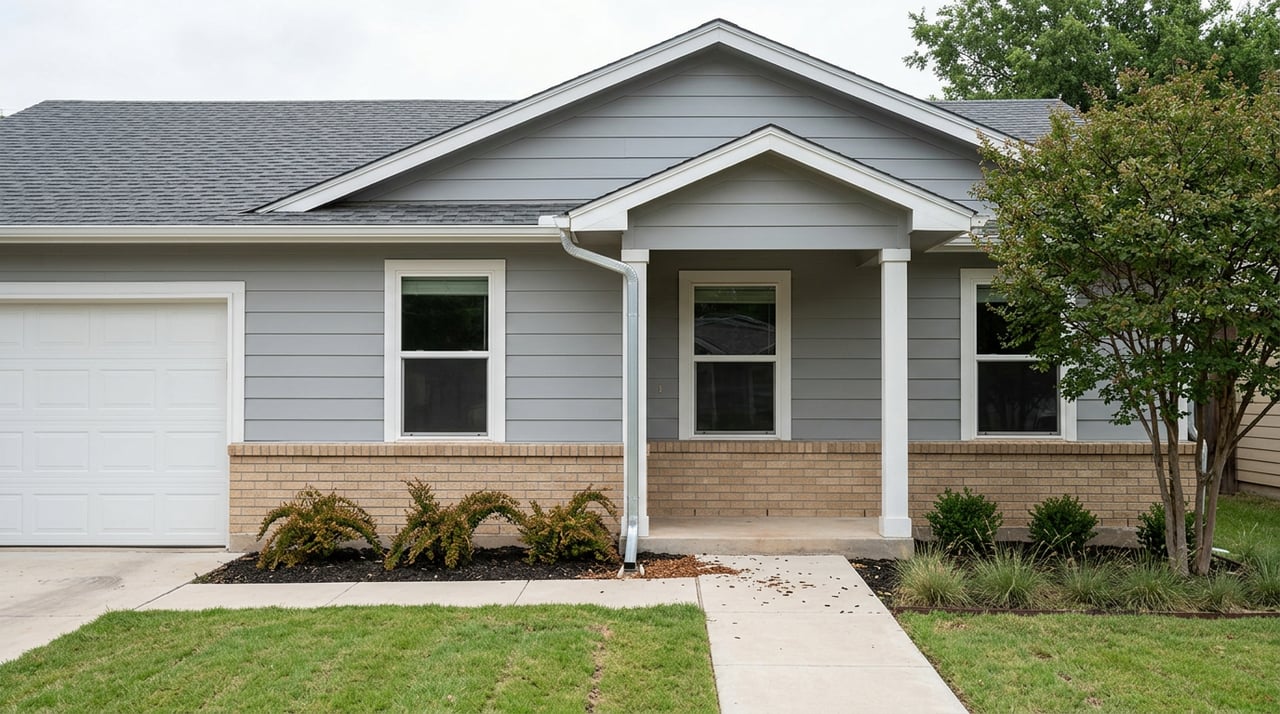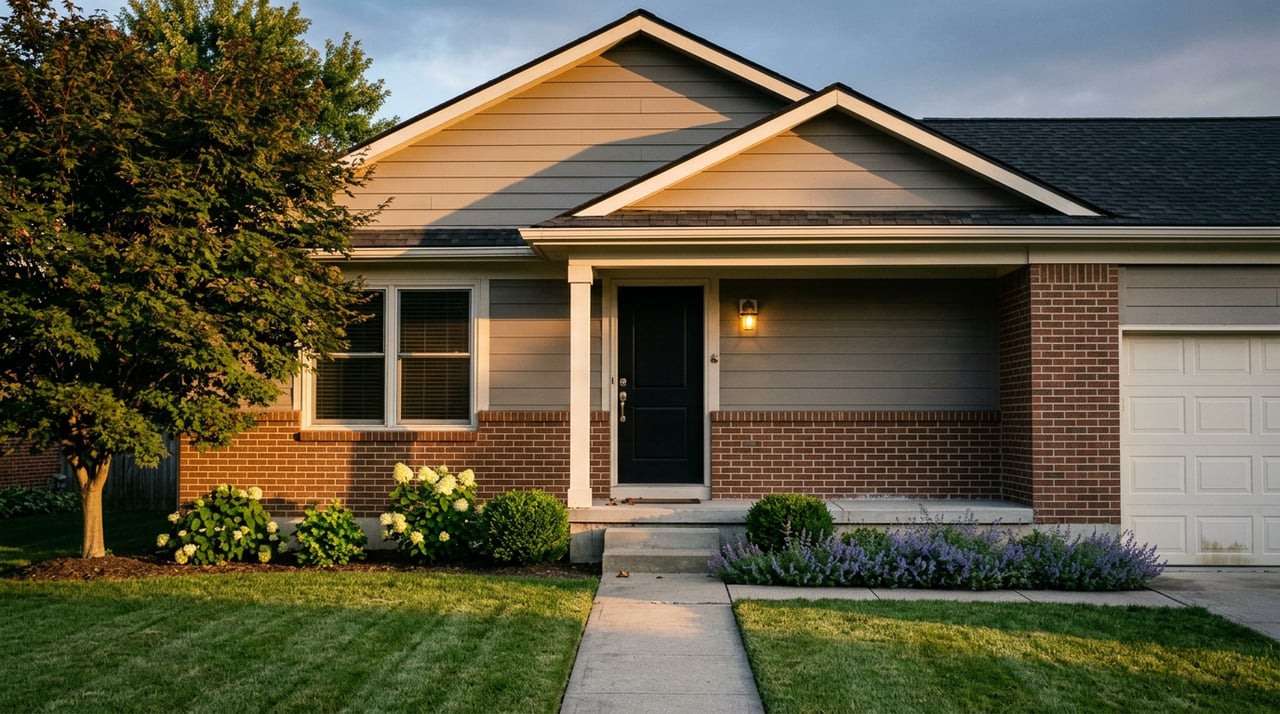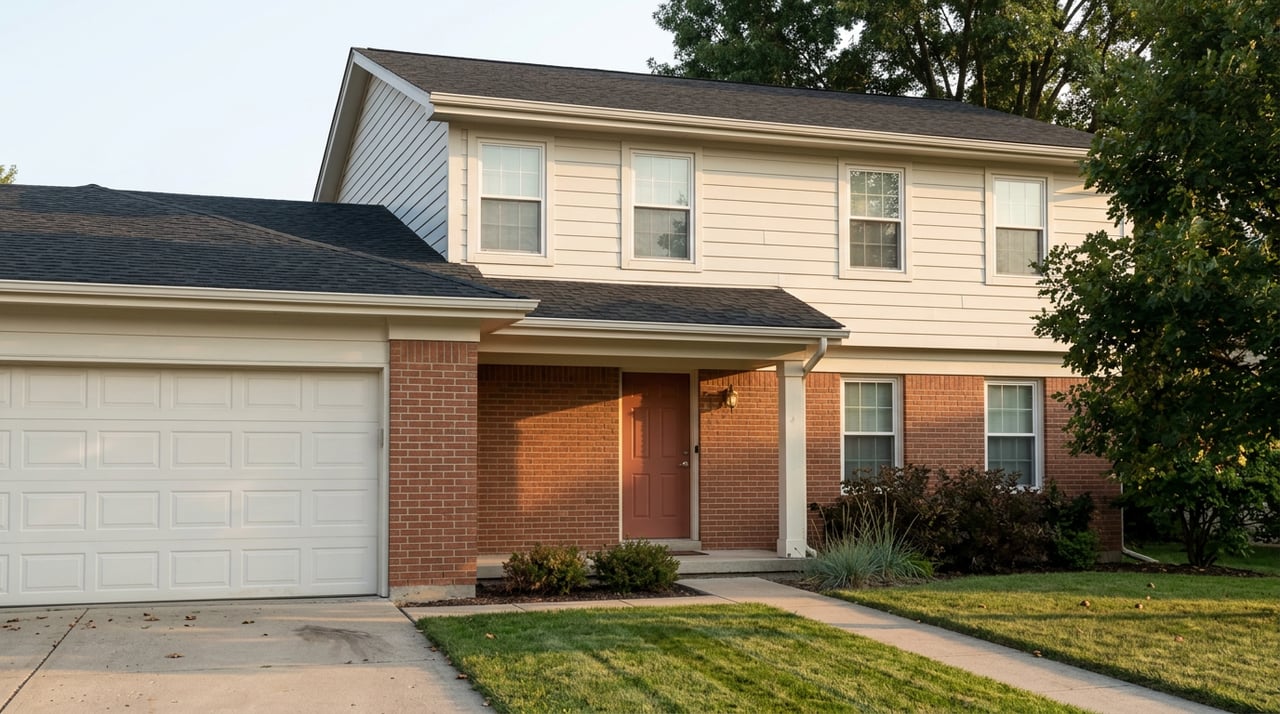
A listing agent describes a house as sitting on "Columbia City's only brick street." Another calls the same stretch of North Chauncey a cobblestone road lined with Victorian homes. Both descriptions show up in active local listing copy this year, and neither one is wrong exactly, but the disagreement is a small tell. If the people writing marketing copy for these homes aren't sure what the street is paved with, how confident should a buyer be about what the historic designation on the house actually does?
That's the real question worth answering before anyone signs on a home inside Columbia City's National Register Historic District, and the answer surprises most people. The federal listing that makes these homes feel protected and special does almost nothing to control what an owner can do to the property. The friction that actually matters shows up later, when it's time to put a number on the house.
What the district actually is
Columbia City Historic District was added to the National Register of Historic Places in 1987, reference number 87001307. It covers 197 contributing buildings spread across the central business district and the residential blocks around it, developed between roughly 1840 and 1937, and it holds a genuine mix of architectural styles: Greek Revival, Italianate, Queen Anne, Second Empire, Classical Revival, and Bungalow or American Craftsman homes. The boundary runs roughly along Jefferson, Walnut, Ellsworth, and Wayne Streets, with North Chauncey Street forming its own edge.
Named contributing structures inside the district include the Whitley County Courthouse (listed separately as well), the Thomas R. Marshall House built in 1874 and now home to the Whitley County Historical Museum, the Adams Y. Hooper Residence from around 1860, the Thomas Shorb Residence from around 1875, the William McNagny Residence from around 1880, the Elisha L. McLallen House from 1905, the 1875 Whitley County Jail, the 1917 City Hall, the 1919 Peabody or Carnegie Library, the 1935 U.S. Post Office, and the 1872 Central Building. Thomas Marshall himself went on to serve as Indiana's governor from 1909 to 1912 before becoming Vice President under Woodrow Wilson, which is the kind of detail that makes a walking tour interesting but has nothing to do with what a current owner can do to a windowsill.
The assumption that gets corrected the hard way
Here's the part that trips people up. A federal historic listing sounds like it comes with rules, review boards, and a permission slip every time someone wants to repaint a porch or replace a roof. In reality, that's almost never true. Indiana Landmarks, the state's leading preservation nonprofit, puts it plainly in its owner FAQ:
"Owners can modify their historic properties as they wish, even if listed in the National Register."
That single line reorders the whole conversation. The restrictions that actually bind a private owner come from a separate and independent layer of law: a local historic preservation ordinance, adopted city by city under Indiana Code 36-7-11.1, that sets up a commission and requires a Certificate of Appropriateness before certain exterior changes. Cities like Indianapolis, Fort Wayne, and Madison run commissions like this. Whether Columbia City has adopted one of its own is worth confirming directly with the city before you buy or renovate, because that answer, not the National Register plaque, is what tells you whether you'll need sign-off to swap a window sash or side a garage.
Here's how the two layers actually compare:
| National Register listing | Local historic district ordinance | |
|---|---|---|
| Who administers it | National Park Service, via the state's Division of Historic Preservation and Archaeology | The city or town, through its own preservation commission |
| What it restricts for a private owner using private money | Nothing | Exterior alterations, demolition, sometimes new construction, depending on the ordinance |
| What it enables | Eligibility for federal and state rehabilitation tax credits on qualifying projects | Local review process and design guidelines |
| When it applies at all | Only if federal or state funds or permits are involved | Any time the ordinance's Certificate of Appropriateness requirement is triggered |
A property must generally contribute to the district's historic character to be counted among those 197 buildings, and only certified rehabilitation projects on contributing structures qualify for the federal tax credit, worth up to 20 percent of qualified expenses, or Indiana's parallel state credit. Neither credit shows up automatically just because a house sits inside the boundary.
Where the real friction lives: the appraisal
If the historic designation isn't the thing constraining what you build, it is absolutely the thing complicating what you pay or what you can sell for. That's the piece that gets skipped in most guides to buying an old house.
A district built from 197 contributing buildings sounds like a lot of inventory until you remember it's split between commercial storefronts downtown and a residential stretch around North Chauncey and the surrounding blocks, spanning nearly a century of construction styles. An Italianate built in 1875 and a Craftsman bungalow from the 1920s can both sit inside the same federal boundary and mean nothing to each other as comparable sales. Add the fact that these homes turn over slowly, and an appraiser working a district like this can't lean on the automated comp pulls that work fine in a subdivision full of near-identical builder homes a few miles away. Original woodwork, inlaid hardwood floors, pocket doors, and a former maid's quarters with a private back stairway, the kind of features that show up in current North Chauncey listing descriptions, are exactly the details a generic online estimate has no framework for pricing.
This is the moment where a homeowner's confidence about "historic value" and a lender's requirement for a defensible number can pull in different directions. The historic designation might be part of what makes the home desirable to the right buyer, but it isn't a line item an appraiser can just add to a valuation. It has to be supported the same way everything else is: through comparable sales, condition, and the kind of local knowledge that knows which blocks near the courthouse square actually trade at a premium and which just look like they should.
What this means if you're buying or selling here
If you're selling a home inside the district, get the disclosure language right before you list. Don't repeat marketing shorthand about brick streets or design restrictions unless you've confirmed it against the actual district boundary and whatever local ordinance, if any, applies to your specific address. Buyers doing their own research will notice if the listing copy and the public record don't match.
If you're buying, ask two separate questions before you write an offer: whether the home is a contributing structure to the 1987 district, and whether Columbia City has a local ordinance that would require commission review before you touch the exterior. Those are two different answers, from two different offices, and conflating them is the single most common mistake buyers make in districts like this one.
And if you're pricing a sale or trying to figure out what a historic home here is actually worth, treat it as its own category rather than asking a portal for an automated estimate. A century-old home on a street the industry itself can't agree on how to describe deserves a valuation built the same way, from the ground up rather than pulled from an algorithm.
Quick Answers
Does buying a home in the Columbia City Historic District mean I need approval to renovate? Not because of the National Register listing itself. That only applies if federal or state funds or permits are involved. Whether you need approval depends entirely on whether Columbia City has adopted its own local historic preservation ordinance, which is a separate question worth confirming with the city directly.
Is North Chauncey Street actually brick or cobblestone? Local sources disagree, with some listing descriptions calling it a brick street and at least one independent local description calling it cobblestone. If the surface matters to your decision, walk it yourself before you rely on either description.
Do I get a tax credit just for owning a historic home in the district? No. Federal and state rehabilitation tax credits apply only to certified rehabilitation projects on properties that are individually listed or contribute to a verified historic district, and the process to qualify is separate from simply owning the home.
Why does this matter for pricing, not just permitting? Because a district built from under 200 contributing buildings across nearly a century of architectural styles doesn't give an appraiser a clean set of comparable sales the way a modern subdivision does. Getting the number right takes more than a portal estimate.
If you're weighing a purchase or a sale inside Columbia City's historic district, or anywhere else in Northeast Indiana where the comps don't come easy, Morken Real Estate can walk the property with you and put an appraisal-grade number behind it before you make a decision you can't easily undo. Request Your Home Valuation to start that conversation.